Pansini's Days 2026
Petra Belc Krnjaić, Sonja Leboš, Gerald Weber
Editor: Sonja Leboš
Translation: Petra Belc Krnjaić, Sonja Leboš
Proofreading: Sonja Leboš
Concept and production: Association for Interdisciplinary and Intercultural Research (AIIR)
www.uiii.hr
In collaboration with: Austrian Cultural Forum Zagreb, Centre for Culture / Centar za kulturu Korčula, City Library ''Ivan Vidali'', sixpackfilm
Visual identity and graphic design: Roko Jeričević
Support: Austrian Cultural Forum Zagreb, Croatian Audiovisual Centre, Ministry of Culture and Media of the Republic of Croatia
Organisers thank to: Kinoklub Zagreb, Croatian Film Association
The work of the Association for Interdisciplinary and Intercultural Research is institutionally supported by the City of Zagreb – Office for Culture and Civil Society and ''Kultura nova'' Foundation.
Sponsorship:
Aminess Hotels
PROGRAM
Thursday, October 1, 2026
Cinema Hall of the Korčula Cultural Centre
20 – 22h
Siegfried A. Fruhahuf's Retrospective
curators: Petra Belc Krnjaić, Gerald Weber
Blow-up (2000), 1’30’’
Mirror Mechanics (2005), 8’
Höhenrausch (1999), 4’
Exterior Extended (2013), 9’
Where do we go (2018), 4’
Vintage Print (2015), 13’
Schwere Augen remastered (2017), 10’
Thrown (2018), 1’
FLIM FLAM (2026), 15’
Thorax (2019), 8’
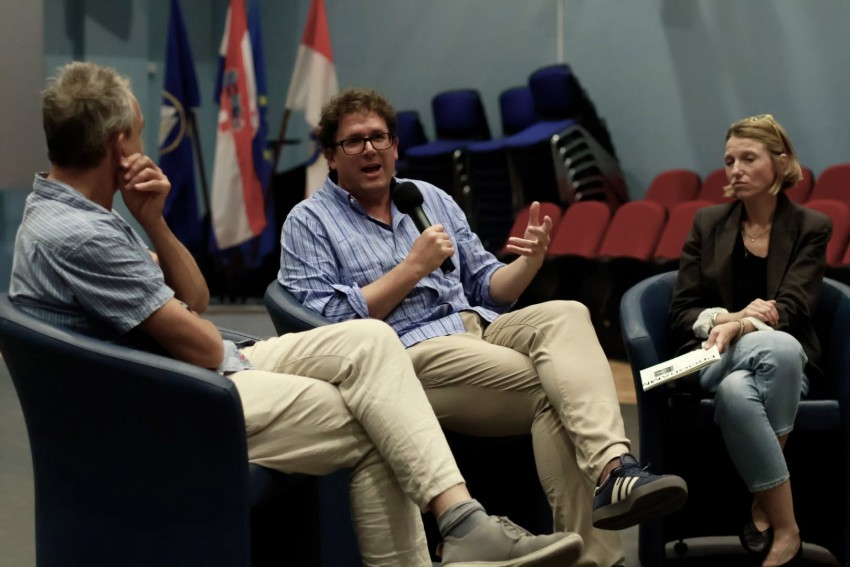
Q&A: Petra Belc Krnjaić, Siegfried A. Fruhauf, Gerald Weber
Friday, October 2, 2026
Cinema Hall of the Korčula Cultural Centre
21 – 23h
Expanded Film with Live Act
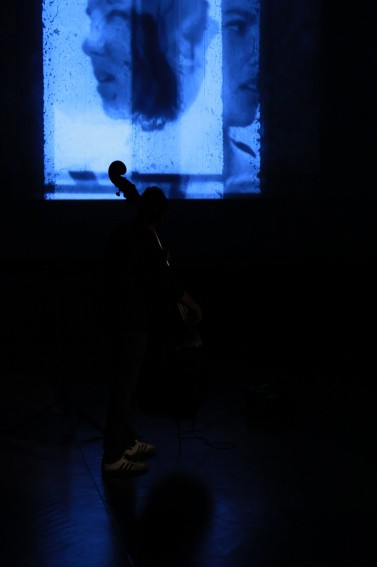
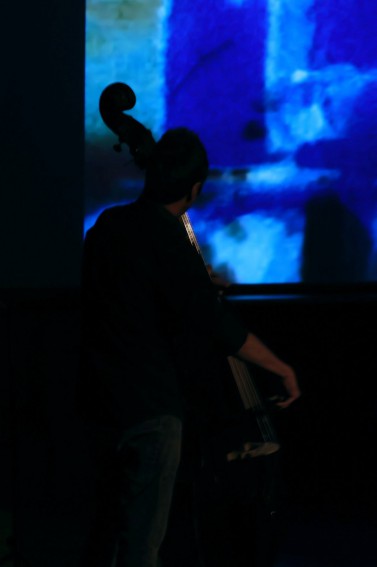
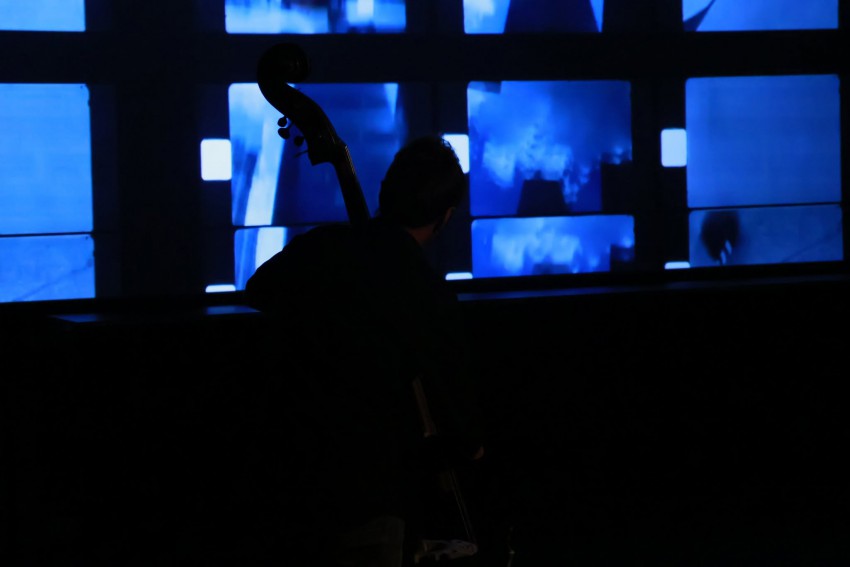
''Siegfried A. Fruhauf Featuring Gildo Bavčević and Igor Stangliczky''
Curator: Sonja Leboš
Saturday, October 3, 2026
City Library „Ivan Vidali“
18-19.30
Book promotion ''Personal Pages – Selected Writings of Mihovil Pansini'' (in Croatian only)
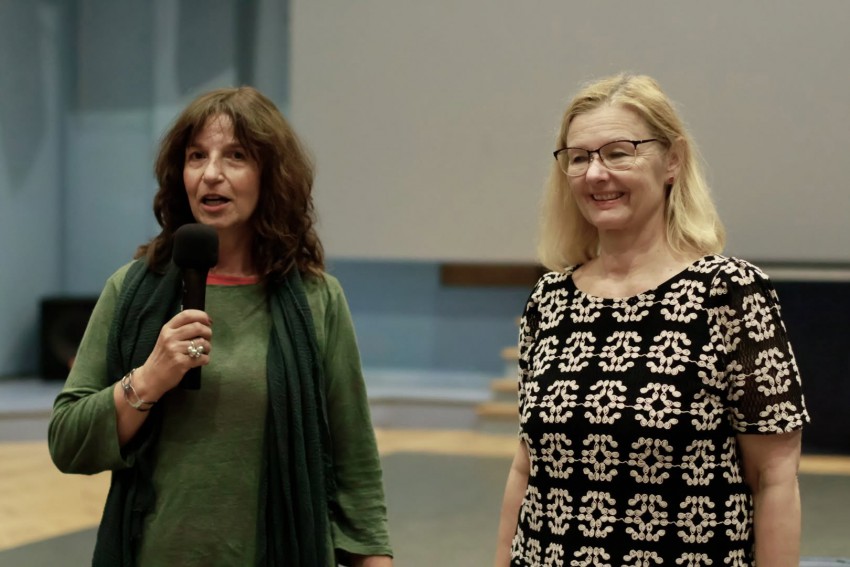
With participation of: Petra Belc Krnjaić, editor; Sonja Leboš (AIIR) and Milojka Skokandić (City Library „Ivan Vidali“), publishers
Cinema Hall of the Korčula Cultural Centre
20-21
Film program: Mihovil Pansini's Mediterranean Trilogy
Curator: Sonja Leboš
Ships Don’t Come Ashore (1955), 14’32’’
Siesta (1958), 6’
Latrine (1963), 17’
About the program
A Dialogue on the Mystery of Cinema
This programme presents a retrospective of the Austrian experimental filmmaker Siegfried A. Fruhauf, whose work enters into a dialogue with the grandfather of Croatian experimental cinema, Mihovil Pansini. "Since childhood, I have stood before a gramophone record and a reel of film as before a mystery that no interpretation can unravel. This unity of time and space meant for me both magic and a scientific task" — so Pansini once described his amazement with cinema. Working in the 1950s and 1960s without a known tradition, guided only by intuition and curiosity, he created an oeuvre that was avant-garde in its time and remains a relevant interlocutor for contemporary experimental cinema, particularly Austrian. The films here are chosen for their transhistorical dialogue with Pansini's method, even where the visual results diverge. Fruhauf himself has said he is interested not in art, but in life: "there are many aspects that play with the space of cinema: as a medium, cinema has the greatest philosophical potential. Of everything that the world means, it contains the most." This echoes the impulse that propelled Pansini toward his own scientific exploration of the medium through the concept of antifilm: "an integral part of life … no longer a cinema of expression, manifestation, communication between the author and the viewer, but also an act of discovery and research." For both filmmakers, cinema becomes less a means of representing the world than a means of investigating what cinema itself can do.
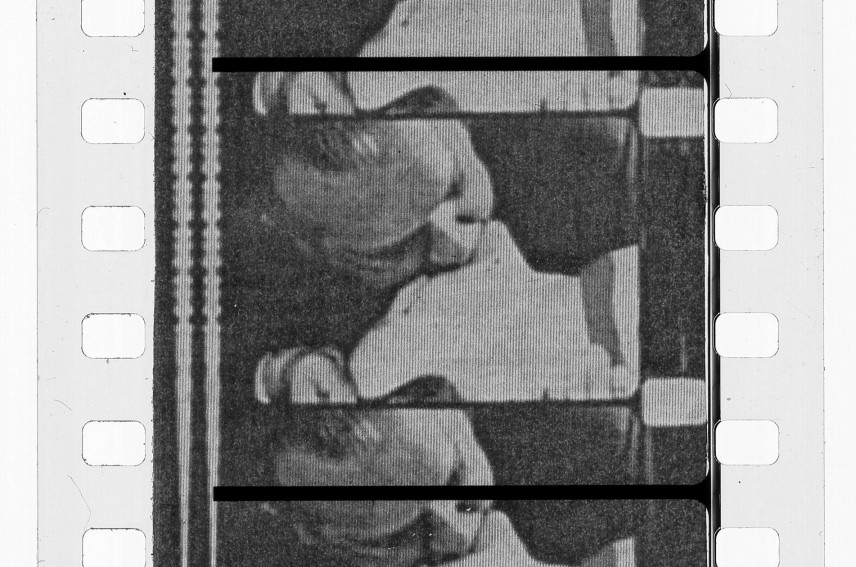
Fruhauf's confrontation with the cinematic apparatus is systematic, but never merely theoretical. His films return again and again to the elementary conditions of cinema: frame, movement, light, projection, repetition, the material strip, the act of seeing. In Blow-Up (2000), two found frames from an instructional film on mouth-to-mouth resuscitation become the starting point for an investigation of film material itself. Initially reduced to a narrow strip, the image is gradually reanimated until it fills the screen, transforming found footage into an inquiry into the mechanical conditions of its own existence.
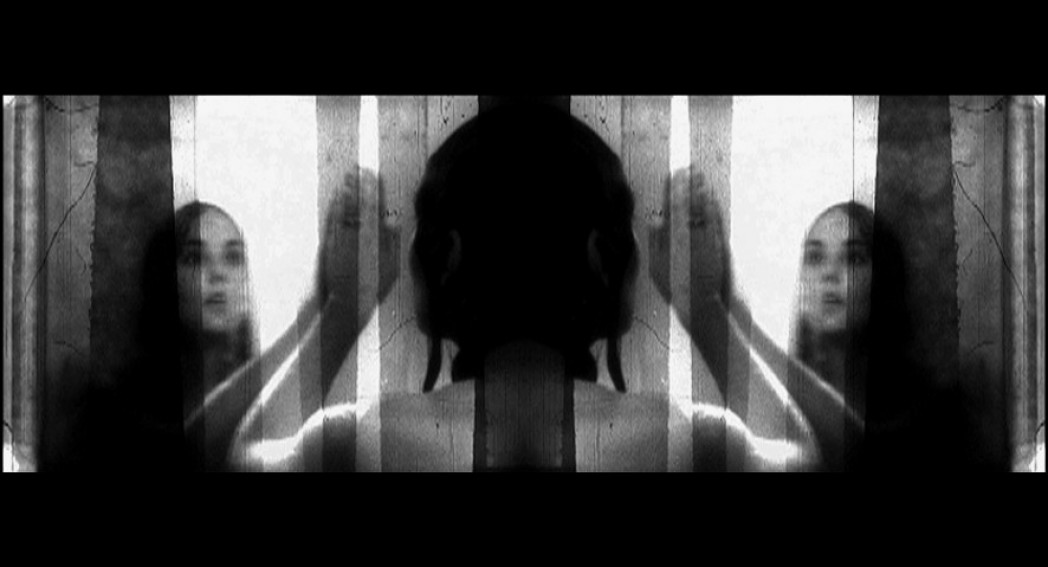
In Mirror Mechanics (2005), the question shifts from the film strip to the gaze. A woman cleans a mirror to reveal her reflection, while the same scene is simultaneously mirrored within the image. The mirror here becomes a model for cinema itself, in which the viewer's act of looking becomes the real subject of the film. This destabilisation of perception can also extend into landscape. In Höhenrausch (1999), the Austrian mountain landscape is taken from the realm of the postcard and subjected to a rapid virtual pan, repetition and cognitive distortion, giving way to perceptual frenzy — rather than depicting landscape, Fruhauf again transforms the act of looking at it. Exterior Extended (2013) and Where Do We Go (2018) continue this interest in natural environments as images in transformation, where reorganising the image becomes a way of questioning the medium itself.
Another strand of Fruhauf's practice concerns copying, layering and the passage between analogue and digital images. In Vintage Print (2015) and Schwere Augen Remastered (2017), reproduction becomes a process of medial translation, in which accumulation and transformation destabilise the boundary between analogue and digital. Thrown (2018) makes the most explicit connection to Pansini's own work: in this one-minute gem, Fruhauf liberates the gaze of the camera by throwing it freely into the air, mirroring Pansini's liberation of the camera in his 1963 Scusa Signorina.
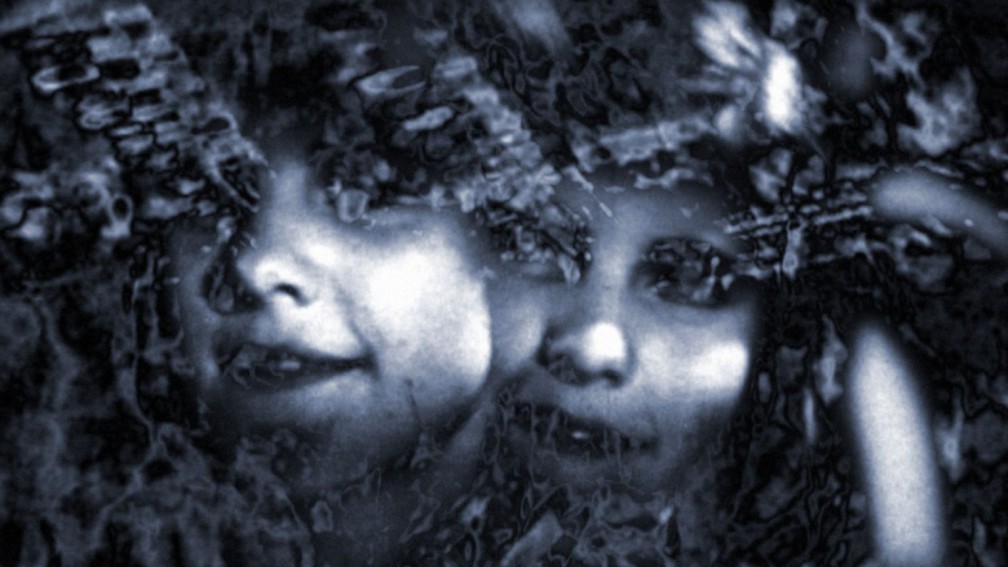
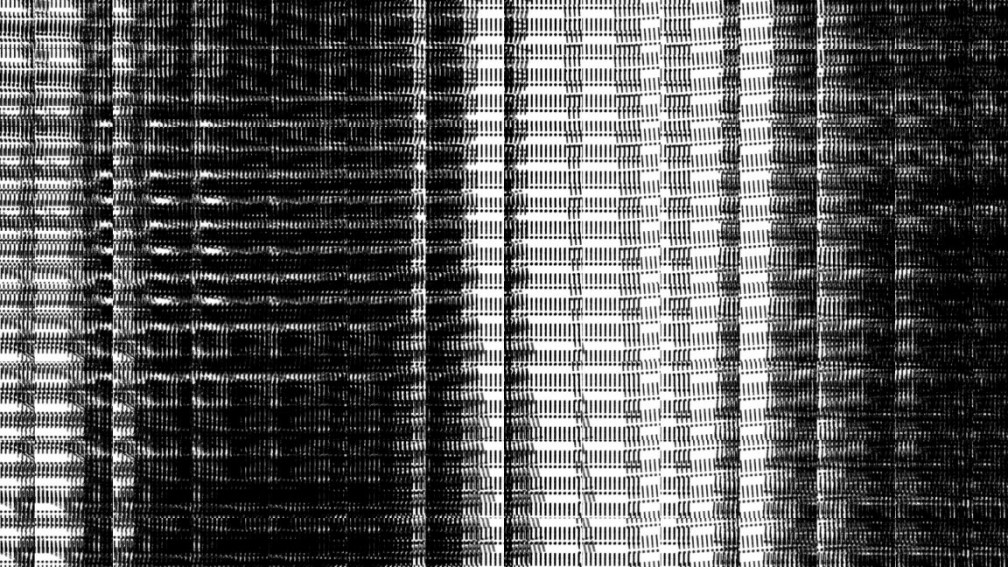
Fruhauf's latest cinematic trickery, Flim Flam (2026), takes as its starting point a zebra and an illusory motion that jolt, tilt and switch places, revealing beneath these layers of deception a nostalgic analogue image of hands tightly holding the animal, an image that keeps us spinning out of perception. Finally, Thorax (2019) brings many of these concerns into an intensely physical, distilled experience. Described by Fruhauf as a "proto-cinematic crystal," the film condenses cinema into flashes of light, shafts, depth and layered perception: a luminous form emerges from the screen while a black-hole-like pull draws the viewer behind it, opening onto a hallucinatory kaleidoscope — an interface between perception and illusion, where analogue and digital aesthetics meet. The glimpse of a human heart, nested beneath the mesh of light, reveals an emotion behind the mesmerising, mathematically precise veneer of these visual experiments.
The hands and the heart might thus be seen as the visualization of "mystery" performed as "scientific task," suggesting there is no real difference between the two. Experimentation becomes a way of penetrating the mystery, and across very different historical and technological conditions, both filmmakers’ approach cinema as an object of discovery, not merely a representation of life but a form through which perception, movement, materiality and reality can themselves be investigated.
Petra Belc Krnjaić i Gerald Weber
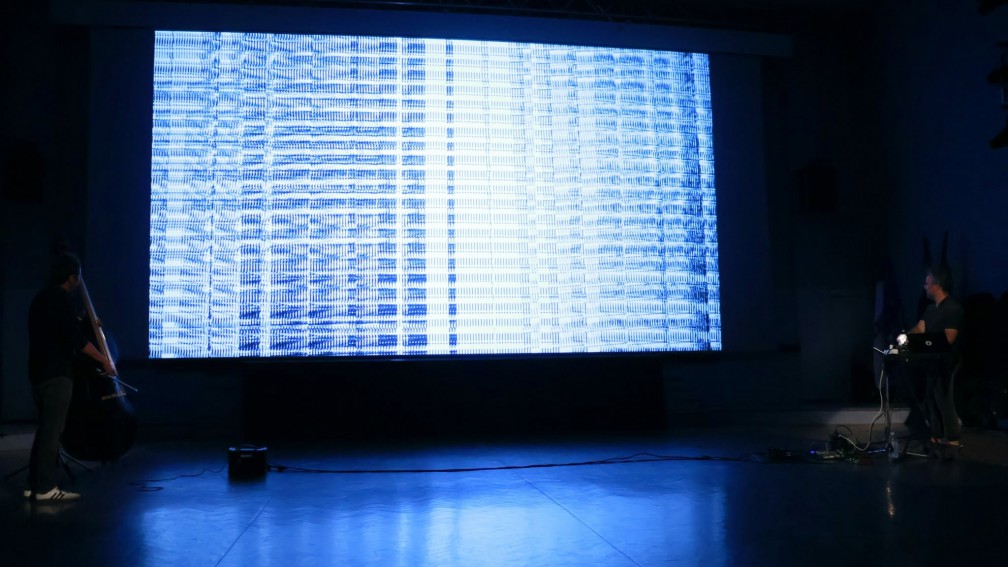
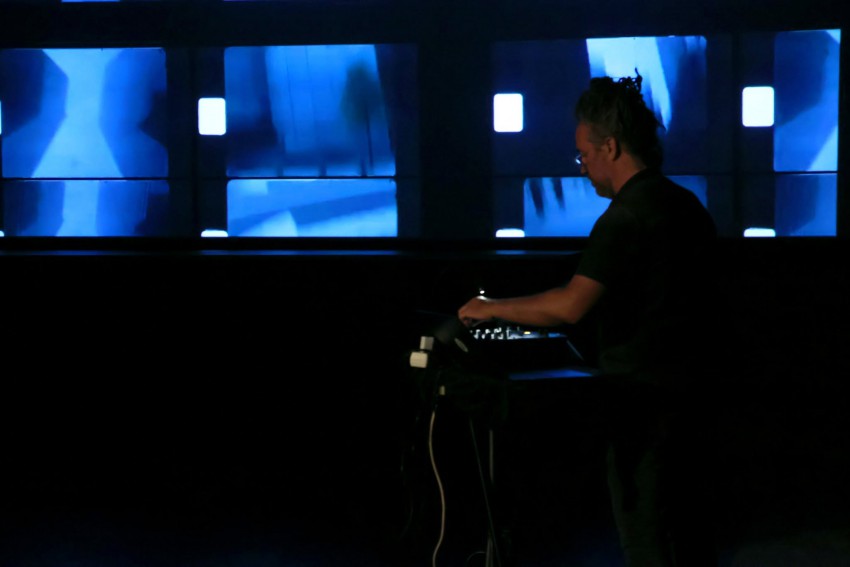
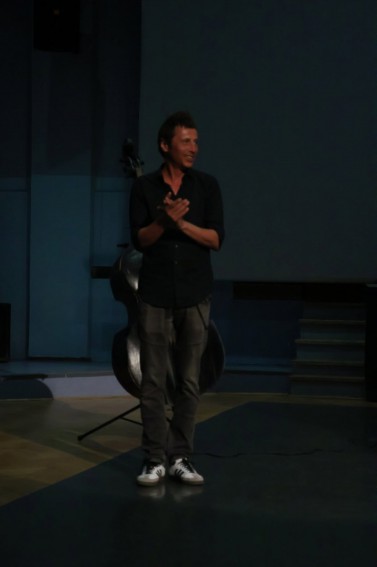
Siegfried A. Fruhauf Featuring Gildo Bavčević and Igor Stangliczky
In 2026, for the first time within Pansini days, we have our own artistic production, which is a practice that we will continue in the following editions. The initial idea of our long-time collaborator Petra Belc Krnjaić was a kind of multimedia performance, audio-visual transdisciplinary collaboration between our guest of honor this year, Siegfried A. Fruhauf (visual component) and multimedia artists Igor Stangliczko and Manja Ristić (audio component). However, since Manja Ristić is at an artistic residency in Portugal at the time of the Pansini Days 2026, I suggested that we entrust the audio component to Igor Stangliczky and Gildo Bavčević.
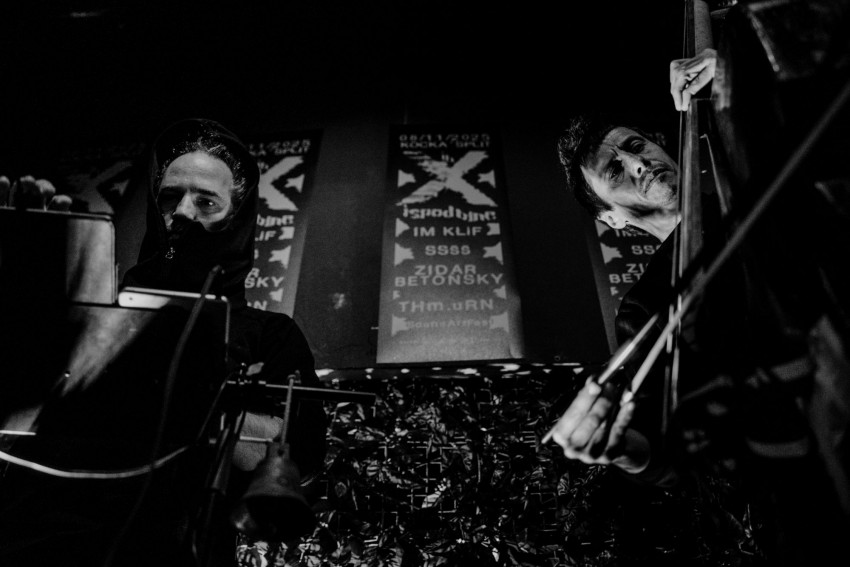
Curator Nataša Kadin—co-director (alongside Hrvoje Pelicarić) of the Split-based sound art festival Ispod bine—was the first to provide an opportunity for the blend of sensibilities of these two artists, doing so at the festival's tenth and, unfortunately, final edition.[1] Thus, on November 8, 2025, in Split, Gildo Bavčević and Igor Stangliczky presented their collaborative audio experiment for the first time under the name SSŠŠ (Scratch Server & Škripe Škure).[2]
Although I had come that day primarily to witness the ''resurrection'' of the legendary Split-based band Zidar Betonsky, SSŠŠ surpassed my (already high) expectations—and not just mine; the audience followed the performance with rapt attention. As Nataša Kadin writes, it was a ''sound performance where the mechanical sound of double bass strings meets their digital reinterpretation in real time. Mechanical vibrations produce squeaks, resonances, and fragmented phrases, while controlled digital feedback, filters, and ring modulation shape layered sequences, glitches, and fractured rhythms. The result is a sonic network at the boundary between the acoustic and the synthetic — the organic and the digital dance in constant dialogue, sometimes merging, sometimes mirroring each other, in a continuous process of transformation.'' A unique, captivating, and deeply refreshing live sonic experience.
Thus, as this text is being written, an artwork is taking shape—one I would characterize as an expanded film—which we have titled Siegfried A. Fruhauf Presents Gildo Bavčević and Igor Stangliczky. Unused segments from Fruhauf’s films—some of which are part of the retrospective curated by Petra Belc Krnjaić and Gerald Weber for this year’s program (such as Mirror Mechanics from 2005 or the latest, FLIM FLAM from 2026—noted at this year’s Berlinale as a ''visual and acoustic contemplation on perception, deception, truth, and the film medium itself''),[3] while others are not (like the work Real from 2021),[4] —will thus acquire new rhizomatic extensions through a specific sequence of jointly selected visual materials, a process of audiovisual composition, and a live performance by Gildo Bavčević and Igor Stangliczky.
Sonja Leboš
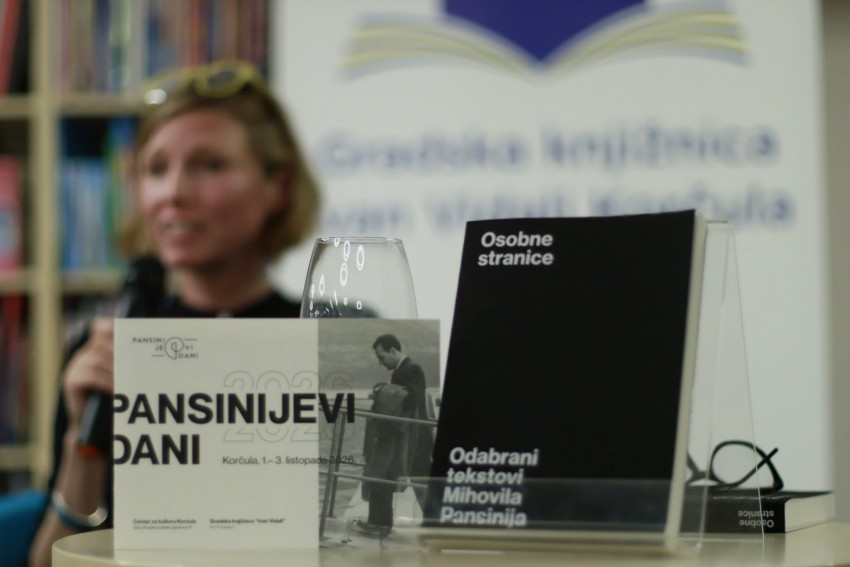
Promotion of the book Personal Pages – Selected Writings of Mihovil Pansini
In front of the readers is the first edition of selected texts by Mihovil Pansini (1926–2016), a singular figure in Croatian and Yugoslav film culture, a film director, otorhinolaryngologist, and thinker whose textual output spans nearly half a century, from the mid-1950s to the end of the 2010s.
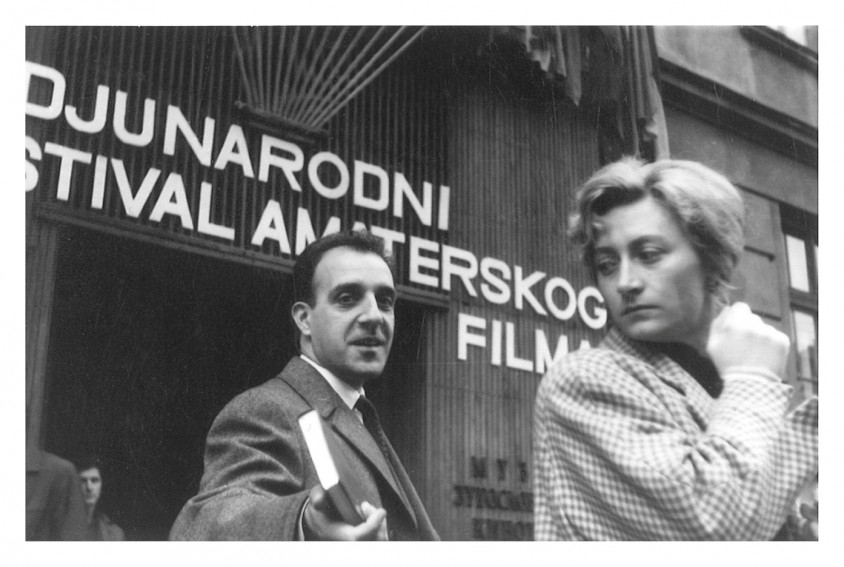
Pansini joined Kinoklub Zagreb in 1954 and, over the following decade, directed 27 films, among them the now-canonical "antifilm trilogy" (Scusa Signorina, K3 or Clear Sky Without Clouds, The Courtyard) from 1963. That same year he founded Genre Film Festival (GEFF), one of the earliest festivals in the world devoted to avant-garde film, and in his manifesto "What Is Antifilm" put forward one of the most radical visions of cinema as a "zero point of the medium," liberated from narration and devoted to pure contemplation. In 1961, Pansini became the first person in history to hold the title of Master of Yugoslav Amateur Film.
Yet Pansini's interest in cinema was never separate from his medical calling. As a specialist in otorhinolaryngology who spent nearly his entire career at the SUVAG Polyclinic in Zagreb, he worked alongside a linguist Petar Guberina to develop the verbotonal method and his own concept of "spaciocepcija" (spatial perception), a sense of spatial perception uniting sight, hearing, balance, touch, and proprioception. His writings on film thus read as a rare fusion of film theory and neurophysiology, an attempt to explain art through the body, and the body through art, while his writings on the verbotonal method likewise draw on film and art to clarify the ideas he sets out in them.
This book brings together, for the first time in one place, the bulk of Pansini's writings on film, two extensive interviews with the author published in the 1980s, and his Osobne stranice (Personal Pages), personal blog entries published on the SUVAG website, in which film, language, cybernetics, and embodiment interweave in a deeply personal, essayistic voice.
For Pansini, cinema was always an ''embrace," an encounter between viewer and image so intense that within it, as he himself put it, he "loves to disappear." This book is an invitation to readers to surrender to that same embrace: to film scholars and critics, to film students, and to scientists from Pansini's other orbit, the medical, rehabilitative, and speech-related one, to discover the thought of one of the most original, and still insufficiently recognized, figures of Croatian and Yugoslav avant-garde.
Alongside Pansini's own texts, the volume includes an essay by Ivan Žaknić contextualizing Pansini's cinematic work, while the editor's extensive introduction maps out Pansini's cinematic and intellectual horizon — from Kinoklub Zagreb and GEFF, through his dialogue with Dušan Makavejev, Ante Peterlić, and Dušan Stojanović, to the cybernetics of Norbert Wiener and information theory
The book was produced as a publishing venture of the Ivan Vidali City Library from Korčula and the Association for Interdisciplinary and Intercultural Research from Zagreb. The edition was edited by film scholar Petra Belc Krnjaić.
Petra Belc Krnjaić
Mihovil Pansini's Mediterranean Trilogy
The aforementioned "anti-film trilogy" is well known to the public—particularly to experts and experimental film enthusiasts alike. However, here I would propose introducing a Mediterranean trilogy, rooted in Pansini’s hometown of Korčula and shaped by the sea, the wind, and the island setting; a trilogy born of the careful observation of people—and their customs and habits—within a Mediterranean town that, though small, in its very minuscule existence and intricate details achieves a beauty rivaling that of Florence.
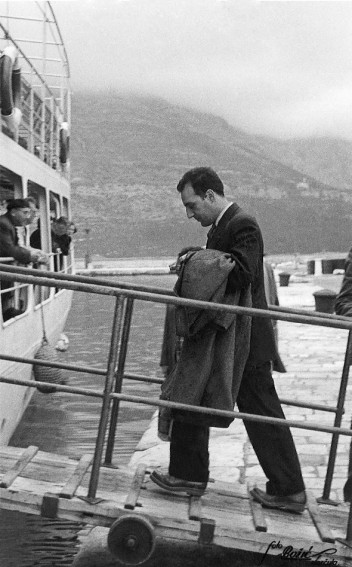
The Mediterranean trilogy predates the "anti-film" cycle; its origins lie in the 1955 existentialist drama Ships Don’t Come Ashore, created shortly after Pansini joined the Zagreb Cinema Club. Filmed on the Mediterranean island of Korčula and dedicated to the Jewish writer Franz Kafka from distant Prague, the drama opens with the words: "Everything is merely a visual reflection of an experienced sense of abandonment." It is a film in which the camera is held by Pansini’s wife, Vesna, a fact rarely mentioned, even though this is precisely how the shots capturing Pansini himself—wandering through streets laid out in a regular fishbone pattern—were created. Suspense alternates with sequences that are eroticized yet never vulgar, creating the impression of a film that foreshadows the French New Wave—a miniature Godardian study where the inability to leave the island mirrors the inability to escape one’s own skin, a realization that surfaces as one waves a shirt at the ship that refuses to dock. Yet, the waving of the white cloth is not an act of surrender, but one of reconciliation: with oneself and with the world.
The 1958 film Siesta is Pansini’s own personal favorite among his works. An elegy of Mediterranean melancholy embodied in the female protagonist (once again his wife, Vesna)—yet devoid of pessimism, a quality that prompted Dušan Makavejev to affectionately dub the filmmaker a "black optimist"—it could have been shot anywhere in the European Mediterranean: In Montenegro, Italy, Croatia, and Spain... there is the siesta—or the Dalmatian pižolot, a word stemming from the same Latin root as the Italian pisolino. It is that restorative Mediterranean habit, portrayed here not necessarily as an afternoon nap, but as a different flow of time—a world in slow motion.
And last but certainly not least, there is Pansini’s Latrine (1963)—a film that could be described as the celluloid essence of empathy, a tribute to the human being, an ode to homo faber, even when that labor consists of the repetitive, exhausting task of disposing of human excrement rather than the sublime ecstasy of creation. How relevant this is today, as the Mediterranean warms at an alarming rate, as its inhabitants drown in sewage discharged by ships, as we are suffocated by the waste we ourselves produce—both literally and metaphorically—and as hellish heatwaves are caused not only by the sun but also by bombs pouring down on children on non-European soil.
"[S]eeing is achieved only partially through the sense of sight," Pansini points out, guiding us toward new grammars of space, for "grammar is a set of rules for assembling parts (words) into wholes (sentences), yet it applies not only to verbal language but also to material reality." Pansini’s films serve as an analytical tool for that objective reality, and his Mediterranean trilogy leaves on the palate not the divine flavors of olive, bread, and wine, but the bitterness of human existence—yet, for all that, it retains the verve and spirit of ever-possible change.
Sonja Leboš
[1] “It has become clear that the festival format can no longer sustain the working conditions in Split. That is why we are transforming ISPOD BINE into a platform for hybrid artistic research, education, and international collaboration—the game continues, only at a different pace, with fewer compromises and more freedom,” Nataša Kadin for Novosti, author Lujo Parežanin, published on November 7, 2025. Source: https://www.portalnovosti.com/natasha-kadin-igra-se-nastavlja-samo-u-drukcijem-ritmu/
[4] “[…] the music video REAL by Siegfried A. Fruhauf: In the perception of the world, the difference between the mass media as they are and the carrier media on which their observations are recorded becomes obscured. Fruhauf ‘rediscovered’ the classic Workers Leaving the Factory by the Lumiere brothers in Harun Farocki's identically named film essay. Fruhauf transferred the latter from VHS to DVD which he in turn shot off a monitor, zooming in and out on details. Now these traces of light pulse to the driving beat of Attwenger's song in the form of tiny digitally exploding remnants of silver grain, conjuring signals from a distant galaxy light years away and relatively delayed as they land on inadequate monitors here on earth.’’ From the text by Claus Philipp, translation by Eve Heller. Source: https://www.siegfriedfruhauf.com/cinema/real/
About authors
Gildo Bavčević received his doctorate at the Faculty of Fine Arts in Belgrade. In his artistic practice, he is preoccupied with political, social, economic and ecological topics, which he most often refers to in his actions and performances, carefully documented and used in subsequent re-conceptualization, criticism and presentations. He explores and creates through the media of performance, video installation, photography, film and sound. Bavčević participated in numerous solo and group exhibitions and festivals in the country and abroad. Among the recent works ''Can do more! Must do more!'' stands out. In that work the emphasis is on the very process of documenting performances that take place beyond the spectacle and apparent splendor of capitalism on examples recorded in our region.
Petra Belc Krnjaić holds a Ph.D. in Film Studies from the University of Zagreb; her thesis explored “The Poetics of Yugoslav Experimental Cinema from the 1960s and 1970s.” As an independent researcher, her focus is on the field of experimental cinema with a chosen interest in the archiving and preservation of small-gauge films, feminism, and visual art. For years she has been also working as a film editor and a producer of film and TV announcements and promotion of TV programs.
Siegfried A. Fruhauf studied experimental visual design at the University of Artistic and Industrial Design in Linz where he first came into contact with the Austrian Film Avantgarde. 2002 - 2008 Program Director at the Youth Media Festival Youki Wels. Since 2009 teaching at the University of Artistic and Industrial Design, Linz, first as lecturer now as senior artist. Numerous works and shows in the area of film, video and photography. Participation in various important international film festivals (Festival de Cannes, International Film Festival of Venice, Berlinale, Sundance Film Festival, ...). 2018 Austrian Art Award for Film. 2022 Upper Austrian Culture Award in the category Film and Video.
Sonja Leboš Ph.D., defended her doctoral thesis under the title “City on Film, Film in the City: Zagreb 1941-1991, cultural-anthropological perspective” in November 2022. Cultural anthropologist, expert in cultural tourism, and art educator. She also studied set design and architecture in Prague and Zagreb. Her activities are in the domain of cultural and urban studies, education and production in culture and art, visual and urban anthropology, and discourse analysis, while her artistic, curatorial, and scientific work tends to merge the liminal fields of narrative urbanism and visual arts, design, theory and practice of performativity, film, and new media. Founder of the Association for Interdisciplinary and Intercultural Research.
Igor Stangliczky is a multimedia artist, works in the fields of handcrafted design, digital graphics and sound art. Taught workshops as regular and guest teacher in various art studios, festivals and schools (Folkhogskole Skogn, Skogn, Norway; Pottstown Public Highschool, USA; 91/1 studio, Belgrade, Serbia, etc.). Produced work and collaborated on the production for art projects such as public furniture (Art2SitOn), special make-up graphics (motion picture industry), traveling sonic research residencies (EuropeanSoundDelta), video+ sound-art performance PQ2011 (Prague Quadrennial of Performance Design and Space Displacements, etc. Member of improvE music collective.
Gerald Weber studied film, history, and geography. In 1996, he co-founded projektor, a discussion forum on film, video and new media. Since 1998, he has been involved in sixpackfilm, an international distribution and sales agency of Austrian independently produced films and art videos. Besides his daily distribution and promotion work, he curates film programmes worldwide and occasionally gives lectures, talks, and writes about film aesthetics and the world of film distribution.